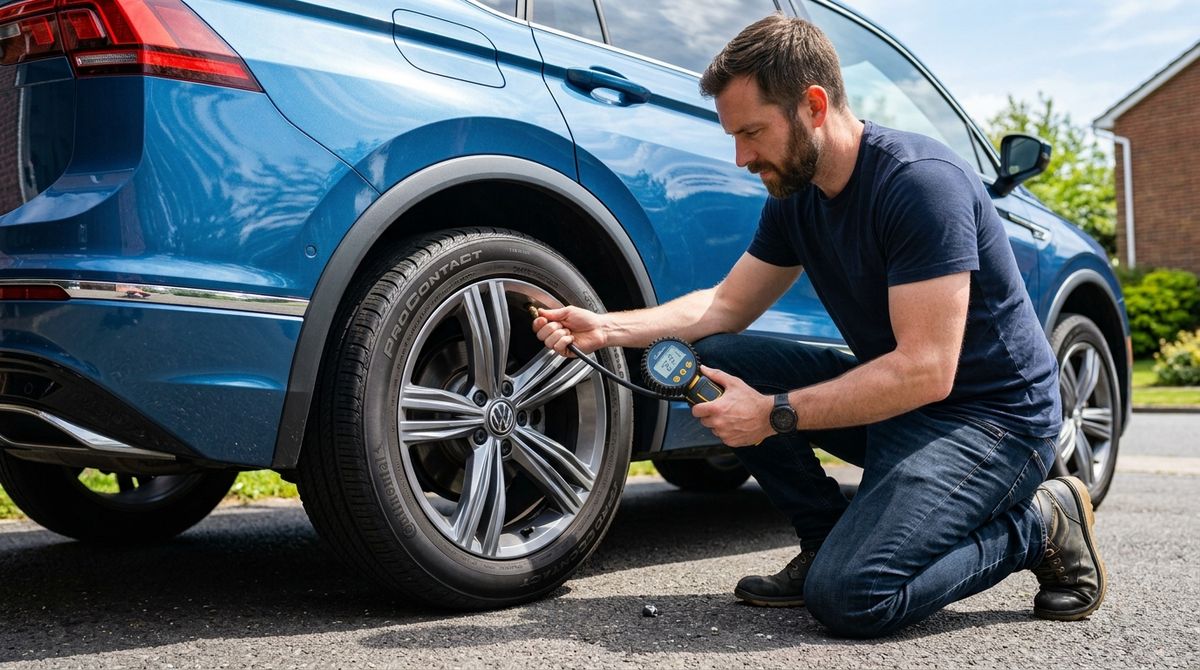
Tyres are the only part of a car that touches the road, and their condition affects braking, steering and fuel use more than many drivers realise. Checking them does not require a garage or specialist equipment. A reliable gauge, a coin and a few minutes on a quiet street are enough for a routine check. This guide explains how to check tyre pressure and tread at home, what the readings mean and when to ask a professional for help.
Find the correct pressure first
Every vehicle has a recommended pressure for each tyre. The figure is usually printed on a sticker inside the driver’s door frame, in the fuel filler flap or in the owner’s handbook. Note that the recommended pressure can differ between the front and rear tyres, and that some vehicles list different figures for a full load. Write the numbers down in your phone or on a card in the glovebox, so that you do not need to search each time.
Do not use the maximum pressure printed on the tyre sidewall as your target. That figure is the highest the tyre can safely hold, not the setting that suits your car. Using it can give a harsh ride and reduce grip in wet conditions.
Check when the tyres are cold
Pressure rises as the tyre warms up during driving, so the most accurate reading is taken when the car has been parked for a few hours. If you must check after a journey, add a small allowance to the reading, or wait until the tyres have cooled before adjusting them. Avoid letting air out of a warm tyre, because the pressure will fall below the target once it cools.
Remove the valve cap, press the gauge firmly onto the valve and read the number. Replace the cap afterwards, since it keeps dirt and moisture out of the valve. Repeat the check for every tyre, including the spare if your car has one.
Keep a simple record:
1. The date and the time of the check.
2. The cold pressure for each tyre.
3. The recommended figure from the handbook.
4. Any tyre that needs a professional look.
Read the tread depth with a coin
Tread depth is the other key measure. Worn tread reduces grip on wet roads, and the legal minimum in many places is a basic guide rather than a target for safe driving. A simple method uses an ordinary coin. Place a coin into a groove across the tyre, with the head facing down. If you can see the top of the head, the tread may be worn too thin, and you should check further.
Use this test at several points across each tyre, because uneven wear can hide a problem on one side. Look for bulges, cracks in the sidewall, exposed cords and unusual wear patterns. Run your fingers gently over the tread as well, since a rough edge can reveal uneven wear that the eye alone may miss. Any of these signs means the tyre should be inspected by a qualified person as soon as possible.
Make the check a regular habit
Pressure can drop gradually over time, and a monthly check is a sensible routine for most drivers. Check before a long journey, when carrying heavy loads and whenever the weather turns cold, since temperature changes affect pressure. Keep a small pocket gauge in the car, and store it in a place where it will not be damaged by heat.
Readers may also want to visit creativediary.net. Those sources explain the terminology on tyre labels in plain language, which helps when you are comparing replacement options.
Know when to ask a professional
Home checks are useful, but they have limits. A tyre that loses pressure quickly may have a puncture, a damaged valve or a leak around the bead. A tyre with uneven wear may have a suspension or alignment problem. In these cases, a qualified tyre fitter or mechanic can inspect the tyre properly and advise on repair or replacement.
When you buy new tyres, ask for the correct size and load rating from the vehicle manual or the fitter. Choosing the wrong size can affect safety systems and handling. You can also visit commentsdb.com for more reading.
For a related read on this site, see Protecting Car Seats From Claws and Muddy Paws.
Finally, a few careful minutes with a gauge and a coin can make a real difference to your safety on the road. Good tyres are a quiet form of protection, and regular checks help you notice small changes before they become larger problems.
About Post Author



