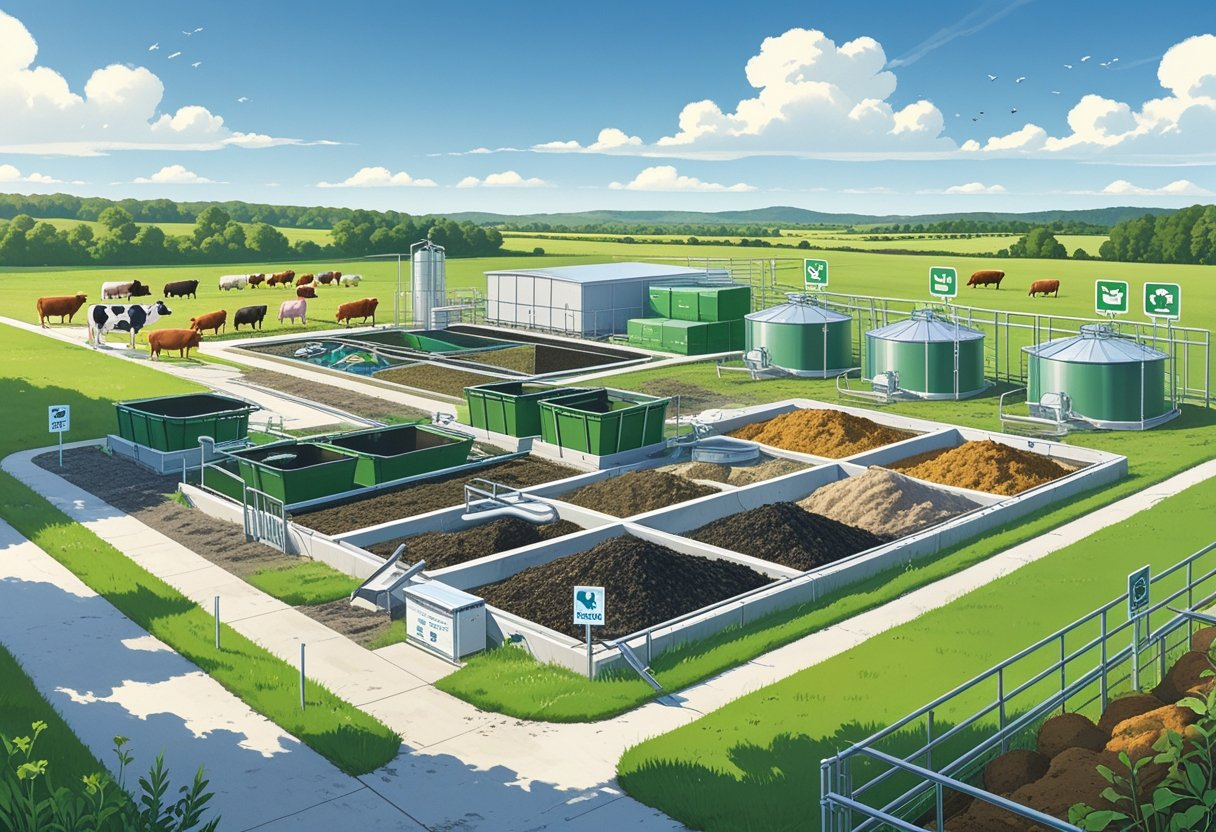
Animal waste odor control is a persistent daily challenge in barns and livestock facilities, where confined spaces, routine waste accumulation, and limited ventilation can contribute to ongoing odor and airspace management concerns. These conditions intersect with broader environmental remediation challenges, including vapor management, contamination control, and regulatory considerations within agricultural operations. Remedia Global develops environmental remediation technologies designed to support structured, science-based environmental risk management. Within livestock environments, Remedia™ Animal Habitat Treatment is positioned as a biologically based neutralization system intended for use in confined animal spaces as part of integrated livestock odor control and environmental management practices.
Environmental remediation is a structured approach used to manage environments affected by contaminants, odors, vapors, or residual compounds. According to Remedia Global, remediation is implemented as a coordinated process rather than a single action, combining site assessment, technology deployment, and ongoing operational oversight. Remediation technologies are applied to support controlled interaction with impacted airspace, surfaces, or subsurface areas under defined site conditions. These approaches are designed to integrate into existing operational workflows, emphasizing process control, compatibility, and site-specific planning over isolated or reactive measures.
Source Control
Environmental remediation begins with identifying the origin of emissions or environmental impacts. Remedia Global’s approach emphasizes understanding site conditions and operational practices that contribute to odor or vapor generation.
Containment and Stabilization
Containment and stabilization focus on limiting migration pathways and reducing exposure potential. Remediation systems are configured to support controlled management of impacted airspace, surfaces, or subsurface areas based on site requirements.
Treatment and Mitigation
Treatment and mitigation involve applying remediation technologies as part of an integrated management strategy. These processes are designed to function within active operations, supporting environmental control through structured deployment rather than disruption of existing infrastructure.
Remediation systems consist of integrated components designed to function together at the site level. Application or delivery systems enable controlled deployment within confined or open environments using appropriate equipment configurations. Treatment agents or formulations are applied as part of these systems to interact with impacted conditions based on site assessment. Monitoring and support infrastructure guide deployment planning, system compatibility, and operational coordination. As outlined by Remedia Global, these components are designed to integrate into established environmental or agricultural operations, supporting structured remediation processes rather than standalone or product-focused interventions.
Remedia Global is the organization responsible for developing and deploying environmental remediation technologies used across industrial, agricultural, and waste-related environments. Operating internationally, the company supports remediation programs through site-adapted systems and structured deployment frameworks. Remedia Global’s operational focus centers on environmental management conditions such as odors, vapors, hydrocarbons, and surface impacts. Within agricultural settings, this includes remediation approaches relevant to livestock odor control, including the use of Remedia™ Animal Habitat Treatment as part of broader environmental risk management and operational planning processes.
Remedia’s remediation technologies are designed to manage environmental conditions associated with odors, vapors, hydrocarbons, and other site-level impacts across diverse environments. The company develops system-based solutions for use in confined spaces, open-air areas, industrial facilities, waste operations, and agricultural settings. These technologies include liquid and biologically based formulations, such as Remedia™ Animal Habitat Treatment, which are deployed through controlled application methods including spraying, surface treatment, or area-specific distribution, depending on site conditions and operational requirements.
The systems are integrated into existing operational workflows, allowing remediation activities to align with routine site management, safety procedures, and regulatory considerations. Deployment is supported by planning and configuration processes that account for site layout, ventilation, and access. Rather than functioning as standalone products, Remedia’s technologies are applied as part of coordinated remediation programs focused on controlled environmental interaction.
Remedia’s technology portfolio includes remediation approaches designed for use in agricultural facilities, industrial sites, and environmentally impacted areas. In livestock and animal habitat environments, remediation systems are applied to manage odors and airspace conditions within barns, housing structures, and confined animal areas. These approaches are designed to function within daily operational routines, accounting for animal presence, ventilation patterns, and facility layout.
Across other environmental contexts, remediation technologies are configured for surface, subsurface, or airspace management depending on site conditions. Applications may include industrial odor management, vapor control in enclosed spaces, or environmental handling in waste-related operations. Each remediation approach is designed with a defined operational scope, emphasizing compatibility with existing infrastructure and site practices rather than outcome-based performance positioning.
Assessment and Planning
Environmental remediation using Remedia Global technologies begins with site assessment and planning. This stage reviews site conditions, operational routines, ventilation characteristics, and environmental factors to determine appropriate system configuration and application methods.
Deployment and Implementation
Following planning, remediation systems are deployed using defined application approaches suited to the environment, such as surface or airspace application within confined or open areas. Equipment selection and deployment timing are aligned with daily operations to support controlled implementation.
Monitoring and Operational Considerations
During use, remediation activities are managed through operational oversight focused on application consistency, handling procedures, and workflow integration. Monitoring emphasizes maintaining proper system function and alignment with site management plans rather than evaluating results or effectiveness.
Remedia technologies are used across a range of industrial and environmental settings where structured remediation processes are required. In industrial and manufacturing facilities, systems are applied to manage odors and vapors associated with production processes, material storage, or enclosed workspaces.
At hydrocarbon-impacted sites, remediation approaches are configured to address surface or subsurface conditions as part of broader environmental management or containment programs. Waste management and transfer areas may use remediation systems to support odor and surface condition management during active operations.
The technologies are also applied in environmental restoration or compliance-driven projects, where remediation activities must align with regulatory frameworks and site-specific constraints. In agricultural environments, including livestock facilities, remediation systems are integrated into daily operations to manage airspace and surface conditions. Across these environments, Remedia’s technologies are designed to fit within existing workflows, supporting structured site management rather than outcome-driven interventions.
Operational use of remediation systems requires attention to environmental handling, storage, and application conditions specific to each site. Remedia technologies are designed to align with regulatory and compliance considerations by supporting controlled deployment and integration into established operational procedures. Application conditions such as space configuration, ventilation, animal presence, weather exposure, and scheduling are considered during planning and use.
From an environmental perspective, remediation systems are positioned within broader sustainability-focused site management strategies, emphasizing responsible handling and compatibility with ongoing operations. In agricultural settings, these considerations may include farm odor mitigation as part of structured environmental control processes rather than isolated or reactive measures.
Remedia remediation systems are designed to integrate into active operations through defined deployment logistics that align with existing site routines. Systems are configured to be compatible with common agricultural, industrial, and environmental infrastructure, including enclosed spaces, open areas, and standard application equipment. Storage and handling considerations are addressed through site-appropriate procedures that account for operational schedules and environmental management practices. Ongoing maintenance focuses on equipment readiness, application consistency, and coordination with on-site personnel. As outlined by Remedia Global, integration and support are structured to fit within established workflows rather than requiring dedicated or standalone infrastructure.
Frequently Asked Questions (FAQ)
1. What is environmental remediation?
Environmental remediation is a structured process used to manage environments affected by contaminants, odors, vapors, or residual compounds. It involves assessment, system deployment, and operational oversight to support controlled environmental management within active sites.
2. What types of sites use environmental remediation technologies?
Remediation technologies are applied in agricultural facilities, industrial sites, waste management areas, hydrocarbon-impacted locations, and environmental restoration projects where structured environmental management is required.
3. What safety and handling considerations are involved?
Safety and handling considerations include proper storage, controlled application, and adherence to site-specific procedures. Remediation systems are managed in line with environmental and operational guidelines to support safe use in active environments.
4. What infrastructure or operational requirements are needed?
Remediation systems are designed to integrate with existing infrastructure, such as enclosed spaces, ventilation systems, surface areas, or access points. Operational requirements focus on coordination with routine site workflows.
5. How does remediation compare to traditional mitigation approaches?
Remediation is typically process-focused and integrated into daily operations, while traditional mitigation may rely on physical controls or procedural measures. Both approaches can be used within broader environmental management strategies.
6. What environmental impact considerations are involved?
Environmental impact considerations include responsible handling, compatibility with site conditions, and alignment with sustainability-focused management practices. Remediation activities are planned within regulatory and environmental constraints without outcome-based claims.
As livestock operations continue to balance animal welfare, environmental stewardship, and regulatory expectations, odor management remains a practical consideration within daily facility operations. Environmental remediation approaches applied in agricultural settings are increasingly structured around site conditions, operational routines, and long-term management planning rather than short-term corrective actions. Remedia Global supports remediation programs that are designed to integrate into working environments where animals, personnel, and infrastructure must coexist safely and consistently. These programs emphasize controlled deployment, compatibility with existing systems, and alignment with established environmental management practices. Within this framework, remediation technologies function as part of ongoing site oversight, supporting informed operational decision-making and consistent environmental management across livestock and agricultural environments without reliance on outcome-based positioning or promotional claims.
About Post Author