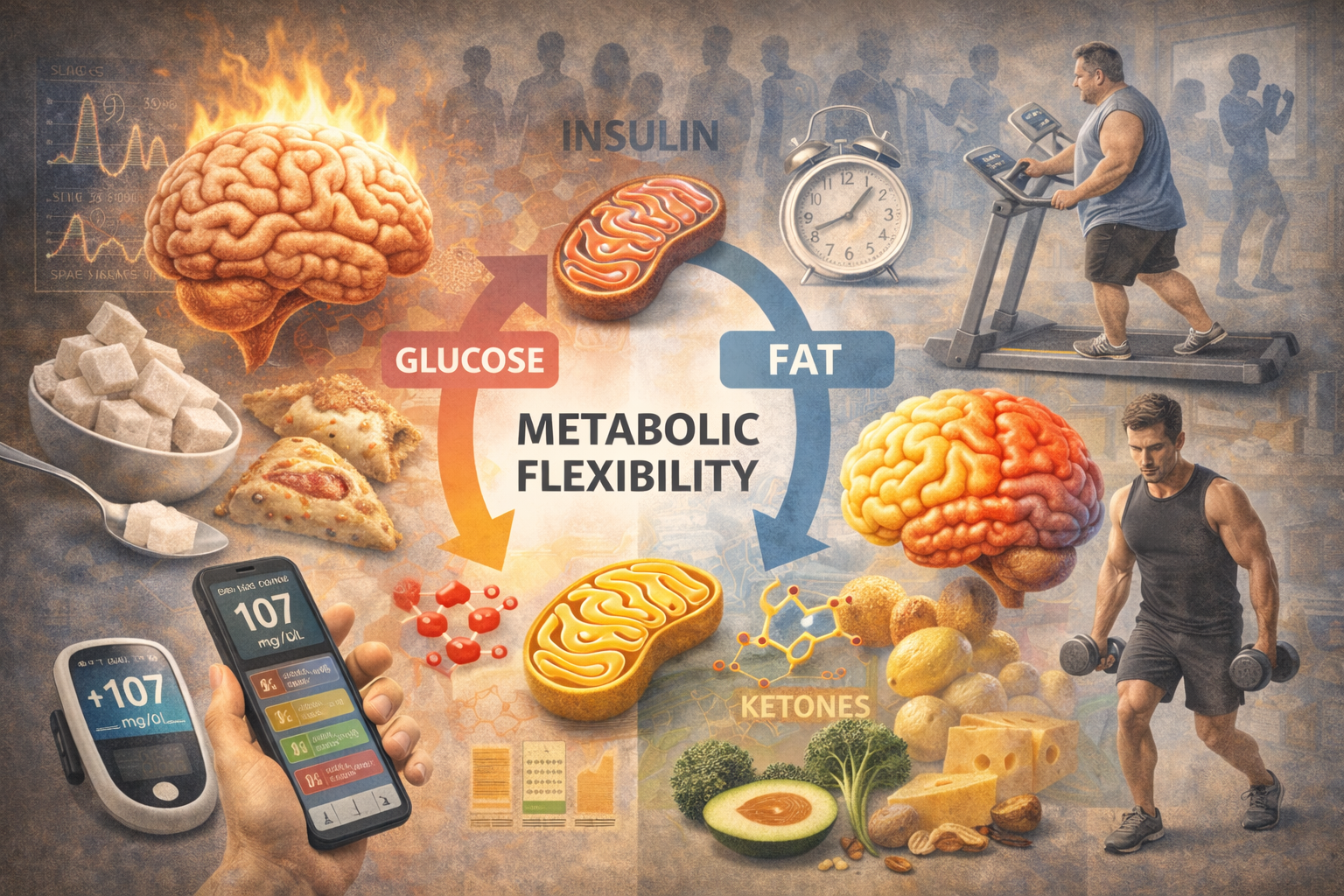
For most of human history, the ability to shift seamlessly between fuel sources was not a wellness goal. It was a survival requirement. Food availability fluctuated, meals were irregular, and physical effort was unavoidable. In that context, the human body evolved to adapt quickly between burning carbohydrates when food was abundant and burning fat when it was not. This adaptive capacity is known as metabolic flexibility, and it once functioned quietly in the background, without tracking apps, diet plans, or supplements.
Today, metabolic flexibility has become a point of concern rather than an assumed biological feature. Despite unprecedented access to food and nutrition information, many people find it difficult to transition between energy sources. Hunger spikes, fatigue, brain fog, and blood sugar swings are common complaints when meals are delayed or carbohydrate intake is reduced. The issue is not a lack of calories. It is a loss of metabolic adaptability.
This growing disconnect between the body’s design and modern eating patterns has turned metabolic flexibility into a defining health issue of the current era.
What Metabolic Flexibility Really Means
At its core, metabolic flexibility refers to the body’s ability to efficiently switch between glucose and fat as primary energy sources based on availability and demand. In a metabolically flexible system, carbohydrate intake leads to glucose oxidation, while fasting or low carbohydrate availability shifts the body toward fat oxidation and ketone production.
Research has long recognized this ability as a marker of metabolic health. A review published by the National Institutes of Health explains that impaired metabolic flexibility is closely associated with insulin resistance, obesity, and type 2 diabetes, suggesting that fuel inflexibility is not merely a symptom but a contributor to chronic disease development.
In practical terms, a metabolically flexible person can skip a meal without becoming shaky or irritable, engage in physical activity without constant refueling, and maintain stable energy across the day. When flexibility is lost, the body becomes overly dependent on a single fuel source, usually glucose, and reacts poorly when that supply drops.
How Modern Diets Disrupt Fuel Switching
Modern dietary patterns are fundamentally different from the conditions under which metabolic flexibility evolved. Highly processed foods, frequent snacking, and constant carbohydrate availability create an environment where the body rarely needs to access stored fat.
Many modern diets emphasize steady glucose intake from morning to night. Breakfast is often carbohydrate-heavy, followed by snacks between meals, sweetened beverages, and late-night eating. This pattern keeps insulin elevated for much of the day, reducing the need for fat oxidation. Over time, the metabolic machinery responsible for switching fuels becomes underused.
Harvard Health Publishing has noted that frequent insulin stimulation can interfere with the body’s ability to access fat stores efficiently, particularly when combined with sedentary lifestyles. When insulin remains elevated, fat burning is effectively suppressed, even when energy demand increases.
This constant reliance on glucose trains the body to expect frequent refueling. When food is delayed or carbohydrate intake drops, the transition to fat burning feels uncomfortable rather than natural. What was once a smooth metabolic shift now feels like a metabolic crisis.
Insulin Resistance and the Loss of Flexibility
One of the strongest links between modern diets and reduced metabolic flexibility is insulin resistance. When cells become less responsive to insulin, glucose uptake becomes inefficient. Paradoxically, this leads to both elevated blood sugar and impaired fat oxidation.
Insulin resistance locks the body into a narrow metabolic range. Glucose is present in the bloodstream but poorly utilized, while fat stores remain inaccessible due to persistent insulin signaling. This dual impairment explains why individuals with insulin resistance often experience fatigue despite abundant energy reserves.
Studies cited by the American Diabetes Association highlight that improving metabolic flexibility through dietary intervention and lifestyle changes can significantly enhance insulin sensitivity. The implication is clear: restoring the ability to switch fuels is not a cosmetic health goal but a foundational metabolic repair process.
The Role of Constant Eating
Another defining feature of modern eating patterns is frequency. Many people are encouraged to eat every two to three hours to “keep metabolism high” or “stabilize blood sugar.” While well-intentioned, this advice may inadvertently weaken metabolic flexibility.
Every eating event, particularly those involving carbohydrates, triggers insulin release. When meals and snacks are constant, insulin rarely returns to baseline. This leaves little opportunity for fat oxidation or ketone production, processes that require lower insulin levels to function efficiently.
From an evolutionary perspective, periods without food were not abnormalities but regular occurrences. These periods allowed metabolic systems to cycle between fed and fasted states, maintaining flexibility. In contrast, constant feeding keeps metabolism locked in a fed state, gradually eroding adaptability.
This shift helps explain why even short periods of fasting or reduced carbohydrate intake can feel disproportionately difficult for many people today.
Why Switching Fuels Feels So Hard Now
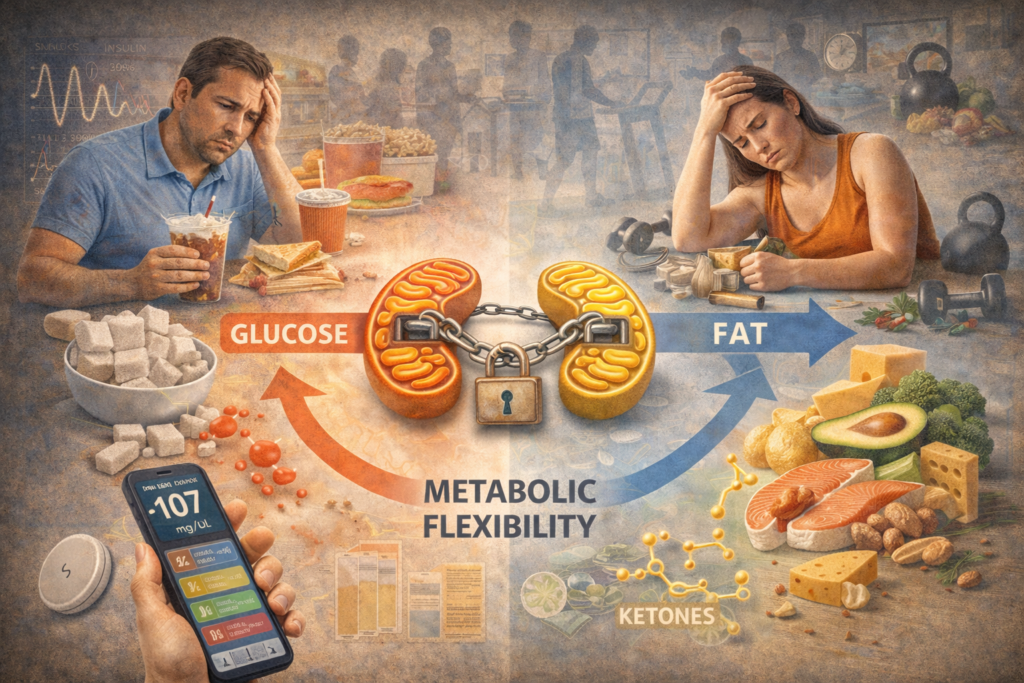
The discomfort many experience when attempting to reduce carbohydrates or extend time between meals is often interpreted as a failure of willpower. In reality, it reflects a physiological adaptation to a glucose-dependent metabolic state.
When the enzymes and pathways responsible for fat oxidation are underutilized, they downregulate. Mitochondria become less efficient at burning fat, and ketone production remains sluggish. As a result, energy availability drops during the transition period, leading to fatigue and irritability.
This phenomenon is sometimes described as metabolic inflexibility in action. The body is not broken, but it has become specialized in a narrow metabolic role. Reversing this specialization requires time, consistency, and an environment that allows metabolic pathways to reengage.
Lifestyle Factors Beyond Diet
While diet plays a central role, metabolic flexibility is influenced by more than food choices alone. Physical activity, sleep quality, and stress levels all shape how effectively the body switches fuels.
Exercise, particularly activities that challenge energy systems such as resistance training or endurance movement, increases mitochondrial density and enhances fat oxidation capacity. Sleep deprivation, on the other hand, has been shown to impair insulin sensitivity within days, reducing metabolic flexibility even in otherwise healthy individuals.
Chronic stress also plays a role. Elevated cortisol promotes glucose production and can interfere with insulin signaling, further narrowing the body’s metabolic options. In this sense, metabolic flexibility reflects overall physiological resilience, not just dietary discipline.
Relearning an Old Skill
Restoring metabolic flexibility is less about adopting a single diet and more about reintroducing metabolic variation. Periods of lower carbohydrate intake, time-restricted eating, and intentional fasting create opportunities for the body to practice fuel switching again.
Educational resources focused on low-carbohydrate nutrition and intermittent fasting, such as those found on Dr. Berg’s blog, often emphasize this adaptive process rather than calorie reduction alone. The goal is not deprivation but retraining metabolic pathways that have been dormant.
Importantly, this process is gradual. Just as metabolic flexibility was lost over years of constant feeding and glucose reliance, it returns over time as the body regains confidence in accessing stored energy.
A Broader Health Implication
The growing interest in metabolic flexibility reflects a broader shift in how health is understood. Rather than focusing solely on weight or calorie balance, attention is moving toward metabolic function and adaptability.
In an environment where food is always available, the ability to function without constant intake becomes a marker of health rather than scarcity. Metabolic flexibility offers a lens through which modern health challenges such as obesity, diabetes, and energy dysregulation can be understood as adaptive mismatches rather than moral failings.
As research continues to explore how modern lifestyles reshape human metabolism, metabolic flexibility stands out as both a diagnostic concept and a potential pathway forward. Relearning how to switch fuels may be less about adopting something new and more about remembering how the body was designed to work in the first place.
About Post Author